
Warehouse Leadership in the Age of Same-Day Delivery
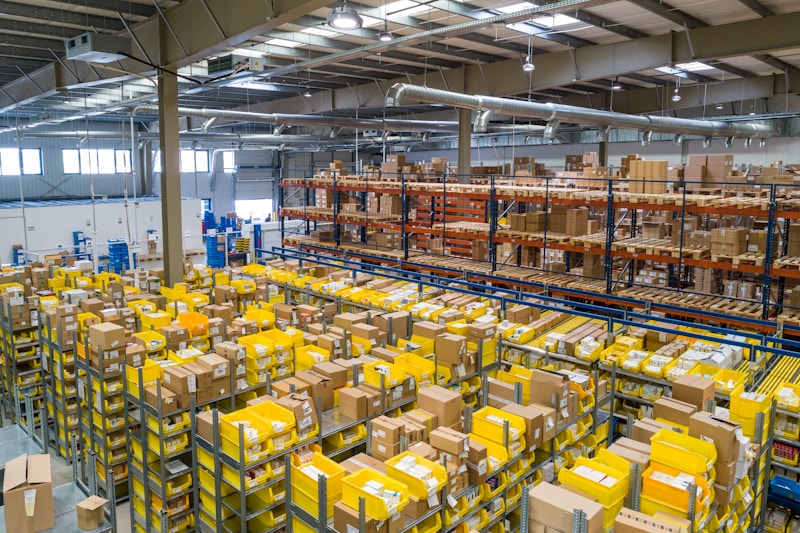
How distribution center supervisors are adapting to impossible expectations.
In This Article
When Same-Day Becomes the Baseline
The warehouse industry has undergone a fundamental transformation. What was once a business of storing and shipping products on multi-day timelines has become a real-time fulfillment engine where same-day and next-day delivery are standard expectations. For warehouse supervisors, this shift has changed nearly every aspect of daily operations.
The pressure is not temporary. Customer expectations for speed will not revert. The supervisors who adapt their leadership approach to this reality will build operations that thrive. Those who manage warehouses like it is still a three-to-five-day shipping world will find themselves perpetually behind.
The Operational Impact of Speed
Same-day delivery compression affects every warehouse function:
Receiving. Inbound product must be received, put away, and made available for picking within hours rather than days. Delayed receiving directly delays customer fulfillment.
Inventory accuracy. When pick-to-ship timelines shrink to hours, inventory accuracy becomes critical. A cycle count discrepancy that would have been caught and corrected in a three-day fulfillment window becomes a failed delivery in a same-day window.
Pick and pack. Wave planning and batch optimization must account for cutoff times that may occur multiple times per day rather than once. The picking strategy that maximizes items per hour may not be the strategy that meets the 2 PM same-day cutoff.
Shipping. Carrier pickup windows become non-negotiable deadlines. A trailer that departs 15 minutes late can cascade into missed delivery promises across hundreds of orders.
Returns processing. Same-day delivery accelerates the returns cycle as well. Products returned today need to be inspected, restocked, and made available quickly to maintain inventory availability.
Leadership in a Time-Compressed Environment
The leadership skills required in high-velocity warehouses differ from traditional warehouse management:
Decision Speed
Same-day operations compress decision windows. Supervisors who deliberate extensively on labor allocation, wave releases, or exception handling create bottlenecks. Effective leaders develop:
- Decision frameworks that allow rapid, consistent choices without lengthy analysis
- Empowered team leads who can make operational decisions without supervisor approval for routine situations
- Pre-planned contingencies for common disruptions: equipment failures, staffing gaps, volume spikes
Communication Cadence
Information in same-day operations has a shorter shelf life. The staffing plan from the morning huddle may be obsolete by noon. Leaders must:
- Increase communication frequency without creating noise
- Use visual management systems that update in real time
- Build quick-check rhythms throughout the shift rather than relying on start-of-shift plans
- Establish clear escalation triggers so developing problems surface quickly
Stress Management
Sustained time pressure creates chronic stress that degrades decision quality and team morale. Supervisors must manage both their own stress and their team's:
- Maintaining composure during peak pressure periods, because panic cascades through teams
- Recognizing when speed pressure is causing safety shortcuts and intervening immediately
- Creating brief recovery moments even during high-intensity shifts
- Monitoring team members for signs of burnout or disengagement driven by relentless pace
Technology as an Accelerator
Same-day fulfillment depends on technology that earlier warehouse operations could function without:
Warehouse management systems (WMS) must support multiple wave releases, dynamic slotting, and real-time inventory visibility. Supervisors need fluency in their WMS to optimize throughput.
Automation integration. Conveyor systems, sortation equipment, robotic picking assists, and automated storage/retrieval systems augment human workers. Supervisors must understand how to optimize the human-automation interface.
Real-time analytics. Dashboards showing current throughput against cutoff targets, labor productivity, and quality metrics enable proactive management rather than reactive firefighting.
Communication tools. Instant messaging, digital task assignment, and mobile alerts keep supervisors connected to their teams across large facilities.
The supervisor's role with technology is not to become an IT specialist but to understand how technology enables their team and to advocate for tools that remove friction from the fulfillment process.
Workforce Strategies for Speed
High-velocity warehouse operations require workforce strategies tuned to their unique demands:
Flexible staffing models. A mix of permanent full-time, part-time, and temporary workers provides the elasticity to match labor supply with variable demand. Managing this mix fairly and effectively is a core supervisor skill.
Cross-training breadth. Workers who can shift between receiving, picking, packing, and shipping as volume demands shift provide operational flexibility that single-function workers cannot.
Ergonomic investment. The physical demands of high-speed warehouse work create injury risks that slow operations and increase costs. Proactive ergonomic programs, proper equipment, and rotation schedules protect worker health and sustain productivity.
Performance transparency. Real-time visibility into individual and team performance, presented as coaching data rather than surveillance, helps workers calibrate their pace and identify improvement opportunities.
Quality Under Pressure
Speed and accuracy are natural adversaries. Maintaining quality in a same-day environment requires deliberate systems:
- Error-proofing through scan verification, visual confirmation, and system checks that catch mistakes before they reach the customer
- Quality metrics with teeth where accuracy is valued equally with speed in performance evaluations
- Root cause discipline when errors occur, investigating why rather than simply correcting the symptom
- Customer impact visibility helping warehouse workers understand what a wrong item or damaged package means to the person receiving it
The Frontline Take
Warehouse leadership in the age of same-day delivery is a relentless exercise in optimization, communication, and human performance management. The supervisors who excel in this environment are not simply faster versions of traditional warehouse managers. They are leaders who have fundamentally adapted their approach to decision-making, communication, and team development for a world where every hour counts. The pace will not slow down. The leaders who build teams capable of sustained high-velocity performance will define the next era of logistics excellence.
Key Takeaway
How distribution center supervisors are adapting to impossible expectations.
Frontline Take
HR's View From The Floor
Related Articles

Driver Retention: A Fleet Manager's Guide to Keeping Your Best
Why drivers leave—and what frontline leaders can do about it.

Last-Mile Delivery Team Management
Leading dispersed teams when you rarely see your workers face-to-face.
Cross-Docking Strategies for Modern Distribution
Reducing warehouse dwell time through smarter dock management.