
Safety Leadership on the Production Floor
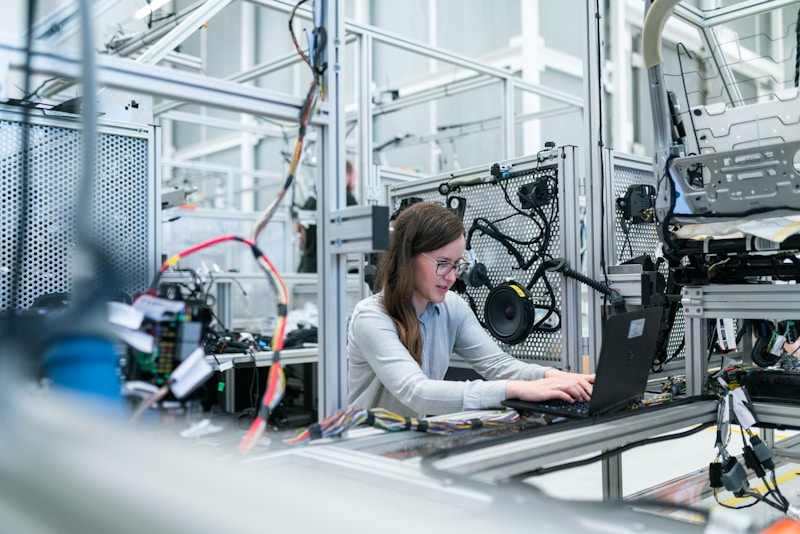
How frontline supervisors are transforming safety culture in manufacturing.
In This Article
Safety as a Leadership Practice, Not a Compliance Exercise
Safety on the production floor is often reduced to metrics: incident rates, near-miss reports, days without a recordable injury. These numbers matter, but they tell an incomplete story. The safest manufacturing operations are not the ones with the most rigorous inspection checklists. They are the ones where safety has become a leadership practice embedded in every decision, every shift, and every interaction.
Production supervisors set the safety tone for their teams through daily behaviors that either reinforce or undermine safety culture. The gap between organizations that achieve genuine safety excellence and those that simply avoid regulatory penalties is almost always a leadership gap.
The Problem with Compliance-Only Safety
When safety is treated primarily as regulatory compliance, several predictable patterns emerge:
Paper safety. Documentation exists to satisfy auditors rather than protect workers. Inspections are completed but not meaningful. Training records show attendance but not comprehension.
Selective enforcement. Safety rules are enforced when management is watching and relaxed when they are not. Workers learn that safety is performative rather than genuine.
Blame-focused investigation. When incidents occur, the investigation focuses on identifying who violated a rule rather than understanding what systemic factors contributed to the failure.
Innovation resistance. New processes, equipment, or materials are evaluated primarily through a compliance lens (does this meet minimum regulatory requirements?) rather than a safety excellence lens (how do we make this as safe as possible?).
Building Genuine Safety Culture
Visible Leadership Commitment
The most powerful safety tool a supervisor possesses is their own behavior. Workers observe what leaders do far more carefully than what they say:
- Wearing PPE consistently without exception, including in areas where the risk seems minimal
- Stopping to address hazards immediately rather than noting them for later follow-up
- Participating in safety activities alongside the team rather than delegating them entirely
- Making safety-positive decisions when safety and production pressure conflict, and explaining the reasoning
Psychological Safety for Physical Safety
Workers who fear punishment for reporting concerns will not report them. The near-miss that goes unreported today becomes the serious incident next month. Building reporting confidence requires:
- Celebrating reports rather than just investigating them. Every near-miss report is a prevented injury
- Responding visibly to reported concerns so workers see that speaking up produces action
- Separating accountability from blame in incident investigations. The question is "what can we change?" not "who can we punish?"
- Anonymous reporting channels for situations where workers feel uncomfortable identifying themselves
Daily Safety Integration
Safety should not be a separate agenda item bolted onto production meetings. It should be woven into every operational conversation:
Pre-shift safety moments. Brief, focused discussions about a specific hazard, a recent near-miss, or a seasonal risk factor. These work best when they are relevant to the actual work happening that shift rather than generic safety platitudes.
Hazard recognition walks. Regular floor walks where supervisors and team members actively look for developing hazards. This is different from formal inspections. It is an ongoing practice of environmental awareness.
Job safety analysis for non-routine tasks. Any task that deviates from standard operations deserves a brief safety conversation: "What could go wrong, and how do we prevent it?"
Incident debriefs. When incidents or near-misses occur, prompt, blame-free discussions that focus on understanding and prevention. These debriefs should include the affected team, not just supervisors.
Common Safety Leadership Failures
Even well-intentioned supervisors can undermine safety culture through common mistakes:
Competing messages. Telling workers that safety is the top priority while simultaneously pressuring them to meet aggressive production targets sends contradictory signals. Workers will follow the signal that has consequences.
Normalization of deviation. When small safety shortcuts become routine because "nothing bad has happened," the boundary between safe and unsafe behavior gradually shifts. Supervisors must recalibrate constantly.
One-way communication. Safety meetings where supervisors lecture and workers listen produce compliance, not engagement. Two-way conversations where workers contribute observations and ideas produce genuine safety ownership.
Inconsistent standards. When experienced workers are allowed to skip safety procedures because "they know what they are doing," newer workers learn that safety rules are negotiable. Standards must apply equally regardless of tenure or skill level.
Measuring Safety Culture, Not Just Safety Outcomes
Traditional safety metrics (incident rates, severity rates) are lagging indicators. They tell you what already happened. Leading indicators predict where safety is heading:
- Near-miss reporting frequency. Increasing reports typically indicate improving safety culture, not worsening conditions. Workers feel safe enough to speak up.
- Safety observation participation. How many workers actively participate in safety walks, hazard identification, and improvement suggestions?
- Corrective action closure rate. When hazards are identified, how quickly are they resolved? Slow closure erodes trust in the reporting system.
- Safety conversation quality. Are pre-shift safety discussions generating genuine engagement, or are they ritualistic?
Empowering Safety Ownership
The ultimate goal of safety leadership is creating a team where every member feels personally responsible for their own safety and their colleagues' safety:
- Stop-work authority genuinely available to every employee, with visible support when it is exercised
- Peer-to-peer safety conversations where team members hold each other accountable without supervisor involvement
- Safety improvement ownership where workers identify hazards and lead the effort to eliminate them
- Cross-training on safety-critical procedures so that safety knowledge is distributed broadly rather than concentrated in a few individuals
The Frontline Take
Safety leadership on the production floor is not about achieving zero incidents on a scoreboard. It is about building an environment where every worker goes home in the same condition they arrived. The supervisors who achieve this consistently are not the strictest rule enforcers. They are the leaders who make safety feel like a shared value rather than an imposed requirement, who respond to concerns with action rather than indifference, and who demonstrate through their own behavior that no production target is worth a preventable injury.
Key Takeaway
How frontline supervisors are transforming safety culture in manufacturing.
Frontline Take
HR's View From The Floor
Related Articles
The Compliance Trap: How Safety Theater Is Killing Engagement
When safety programs become checkbox exercises, employee engagement suffers. Learn how leading companies are moving beyond performative compliance to build cultures where workers actively protect each other.

Upskilling Your Production Team for Industry 4.0
Preparing frontline workers for the automated manufacturing future.
Why Manufacturers Are Paying $2/Hour More—And Still Can't Hire
Despite record wage increases, manufacturers struggle to fill critical positions. The disconnect between compensation and hiring success points to deeper issues around perception, scheduling, and skills that money alone can't solve.